COST GUIDES
How much does Japanese knotweed removal cost?
Updated 06/26
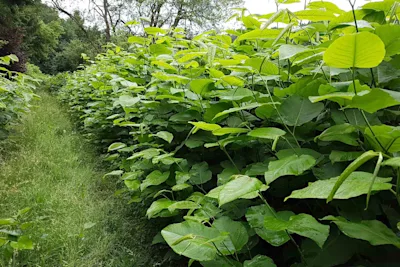

If you've discovered Japanese knotweed then you're probably wondering how to get rid of it. So we've put together this guide on the average Japanese knotweed removal cost in the UK.
Fast Facts
The average cost of domestic Japanese knotweed removal is around £1,500–£2,000
There are numerous ways to remove Japanese knotweed with costs ranging from £950–£20,000
Speak to a qualified removal service for their advice on the best way to remove your Japanese knotweed
Japanese knotweed is a fast-growing weed that spreads rapidly and you'll want to remove it as soon as you can. But how much does Japanese knotweed removal cost?
In this guide, we look at the cost of removing Japanese knotweed using different methods. Keep reading to find out more.
How much does it cost to remove Japanese knotweed?
Below are some of the average Japanese knotweed removal costs in the UK...
| Type of removal service | Unit of cost | Cost + VAT (Range low - high) | Average cost |
|---|---|---|---|
| Average cost of domestic knotweed removal | Per project | £1,500–£2,000 | £1,750 |
| Typical removal methods | |||
| Domestic herbicide treatment (<49 m²) | Per project | £950–£2,950 | £1,750 |
| Full excavation & removal (<49 m²) | Per project | £4,000–£20,000 | £6,500 |
| Alternative methods | |||
| Sifting and screening (<49 m²) | Per project | £1,750–£4,950 | £3,350 |
| Excavation & root barriers (<49 m²) | Per project | £1,750–£4,950 | £3,350 |
| Excavation, on-site relocation & ongoing herbicide treatment (<49 m²) | Per project | £4,000–£20,000 | £6,500 |
| On-site burial (<49 m²) | Per project | £4,000–£14,950 | £9,475 |
| Last updated: June 2026 Our costs are ballpark averages - get a local tradesperson to quote now | |||
What does the removal of Japanese knotweed cost in the UK?
The exact cost will vary depending on the extent of the knotweed problem, but the average cost of domestic knotweed removal in the UK is around £1,500–£2,000.
Here are some of the average costs for various methods of Japanese knotweed removal for an area of less than 50m²:
Domestic herbicide treatment – £950–£2,950
Full excavation and removal – £4,000–£20,000
Sifting and screening – £1,750–£4,950
Excavation and root barriers – £1,750–£4,950
Excavation, on-site relocation, and ongoing herbicide treatment – £4,000–£20,000
On-site burial – £4,000–£14,950
Find a trusted Japanese knotweed removal service

Factors that will affect your Japanese knotweed removal cost
A PCA-qualified surveyor will take several factors into account to determine the cost of removing Japanese knotweed and the best method.
Arguably, the most important factor is the size of the area affected and the extent of growth. The weed's roots can grow up to three metres deep into the ground, making it extremely difficult to completely remove.
Plus, if even the smallest part of the plant is left in the soil, it could quickly return. Other elements a surveyor would review include:
Location
Nearby watercourses
Access issues
Whether the property backs onto Network Rail land
Its distance from habitable space
Whether it's encroaching from or onto neighbouring property
Documentation required - some mortgage lenders require a five-year management plan and guarantee
After the survey, a professional will usually offer a management plan to outline the best methods of controlling or treating the infestation.
Some professionals will include a 10-year warranty and an insurance-backed guarantee for their services.
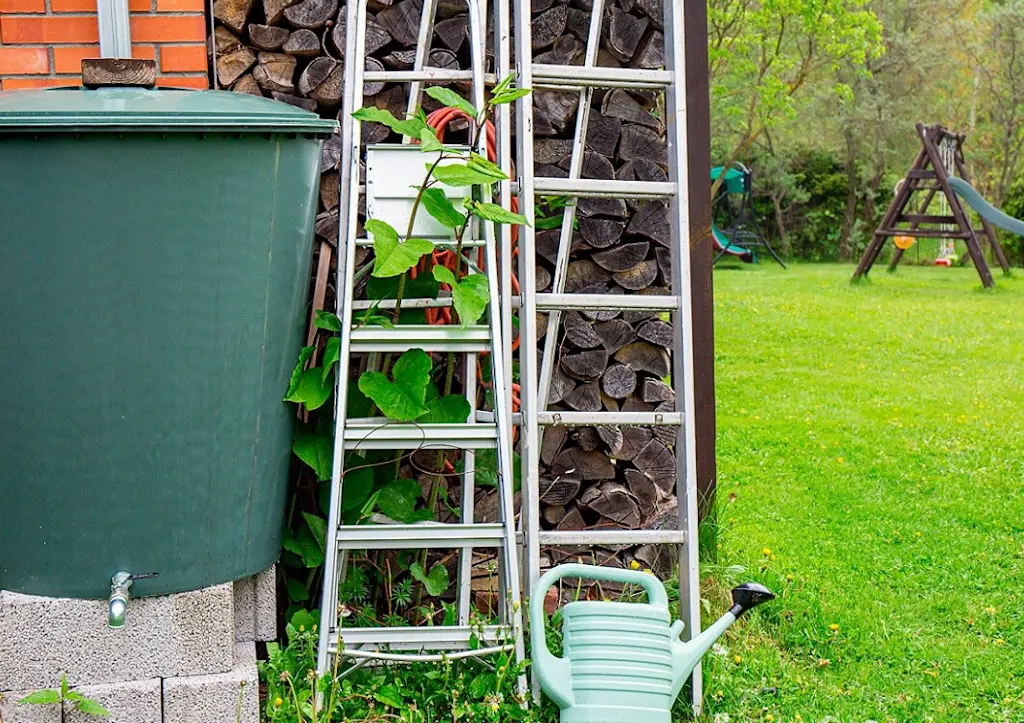
Get an estimate quote for your Japanese knotweed removal
Try the Checkatrade job estimate calculator to get an idea of how much Japanese knotweed removal may cost you.
All you need to do is type out a few details about the situation, such as what method of removal you'd prefer, and the tool will use our data to give you a rough quote.
Job Estimate Calculator

How to identify Japanese knotweed
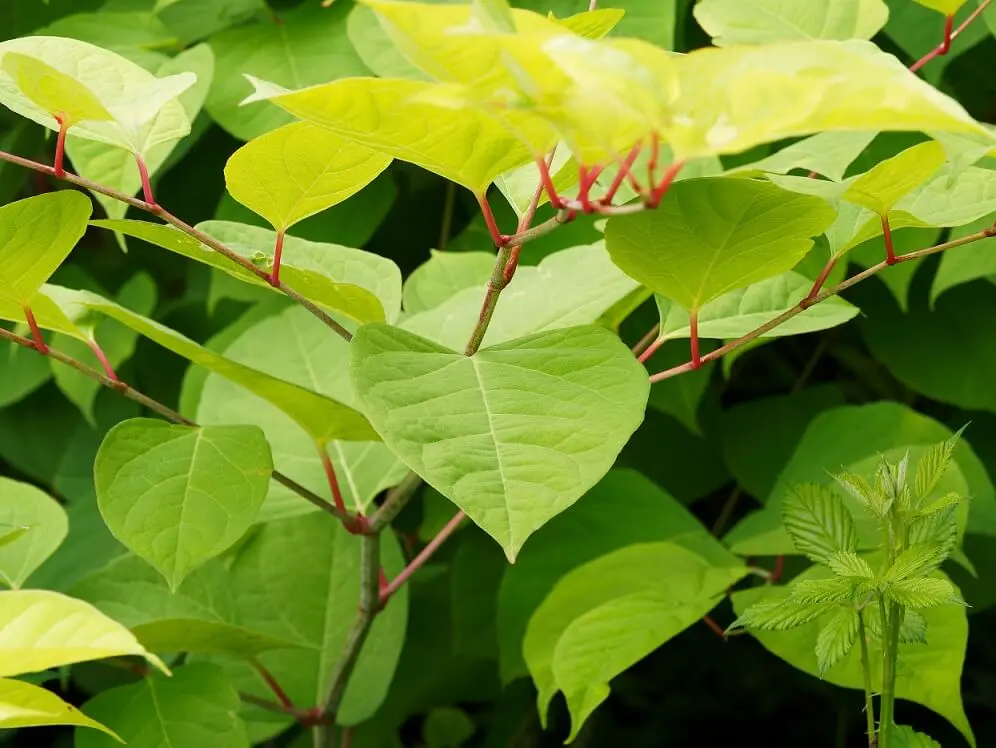
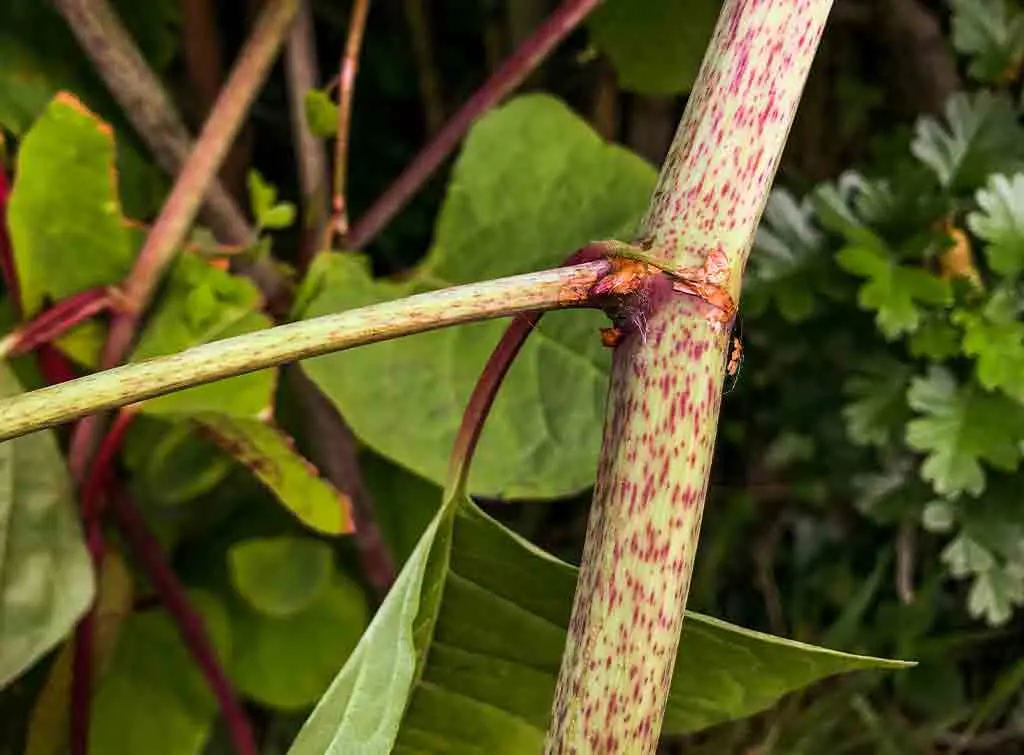
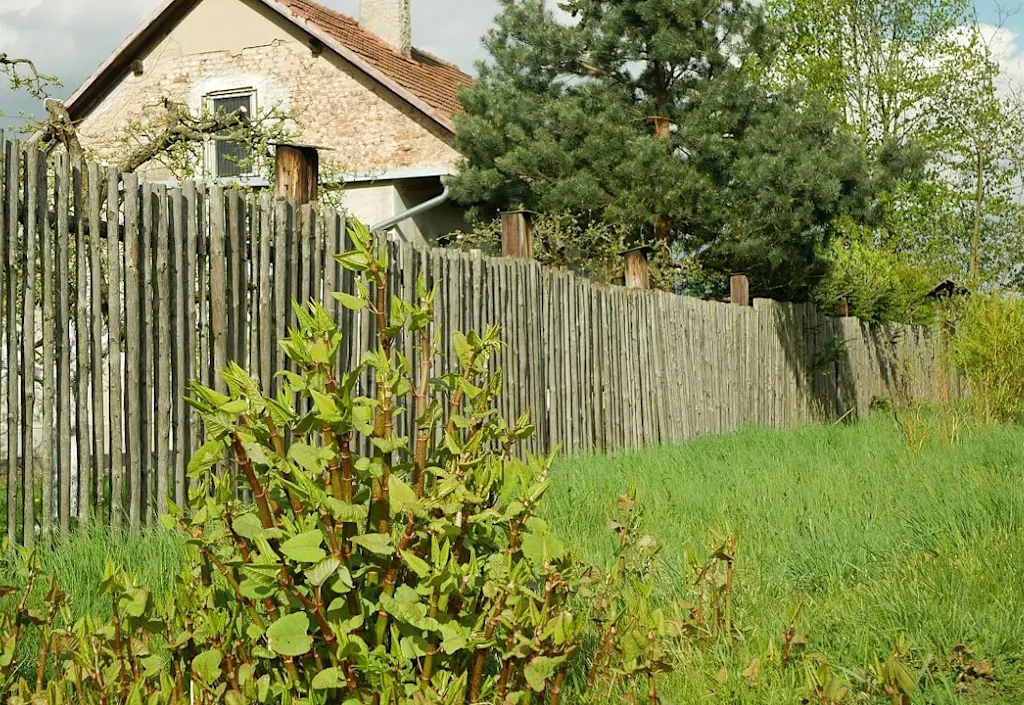
Japanese knotweed can usually be recognised by its heart or spade-shaped leaves, which are smooth and mid-green in colour.
That said, it can be easy to mistake other plants for Japanese knotweed, such as bindweed, houttuynia, and even bamboo.
If you think you may have Japanese knotweed growing in your garden, you'll want to get a survey conducted by a professional.
How to deal with Japanese knotweed
First things first, it's important to note that dealing with a Japanese knotweed infestation requires professional help. Otherwise, you could seriously impact your property's value.
You may even need guarantees of professionally completed work when you come to sell your home.
Not only that, but failing to deal with an infestation could lead to legal claims from affected neighbours. This could add up to tens or even hundreds of times the cost of removing Japanese knotweed in the first place.
The cheapest way to deal with a Japanese knotweed infestation is with a herbicide treatment.
However, this is generally recognised as being a 'control' rather than a one-off solution, because there's a risk of dormancy and regrowth, especially on land that's disturbed.
At the other end of the scale, you can get Japanese knotweed excavated and disposed of at a landfill, known as dig-and-dump.
This will cost around ten times the amount of herbicide treatment, but it's a more permanent solution.
What is the process to remove Japanese knotweed?
Numerous processes can be used and these will all affect the cost of removing Japanese knotweed.
However, there are only two that are commonly used, especially in domestic settings: 1) herbicide treatment and 2) excavation and removal.
Herbicide treatment
Herbicide treatment is a long-term, ongoing solution for managing and controlling Japanese knotweed as opposed to completely eradicating it.
You're looking at a cost of somewhere in the region of £950–£2,950 for a domestic herbicide treatment.
There are a variety of pesticides that are effective on Japanese knotweed, but we'd recommend working with a professional who'll likely have access to stronger herbicides.
Herbicides are usually sprayed onto the leaves of the plant (although if you're keen not to damage neighbouring plants, there's also the option to use herbicide stem injections).
You'll usually need to repeat the treatment two to three times a year. Often, after three to five years, the knotweed will stop growing back, at which point you may be able to cease treatment.
Make sure that you work with a qualified PCA Surveyor who can give you a five-year plan and an insurance-backed guarantee to ensure you're dealing with the problem effectively. This is often required for mortgage lenders if you're buying or selling the property.
Excavation and removal
Known as a dig-out or dig-and-dump, excavating Japanese knotweed is a way to instantly eradicate the plant, as opposed to simply controlling it as is the case in herbicide treatment.
In this case, a professional will dig down to a depth of around two metres, and then transfer the waste to landfill.
The waste is removed from the site as ‘controlled waste’ and disposed of in landfill sites that are fully licensed to receive Japanese knotweed.
This is a very effective method of Japanese knotweed removal and is usually permanent, but it is much more expensive than herbicide treatment.
If you opt for full excavation, you can expect your Japanese knotweed removal cost to be in the region of £4,000–£20,000 – depending on the extent of the problem.
Find a trusted Japanese knotweed removal service
Japanese knotweed removal tips from an expert
We spoke to PCA specialist Simon Turner from Japanese Knotweed Group Ltd to get his top tips on dealing with Japanese knotweed.
He advises:
"If you spot Japanese knotweed on your property, don't dig it up. Leave it where it is and call in a PCA specialist. To sell your property, you'll need a five-year plan and an insurance-backed guarantee, so make sure you're getting a specialist in instead of paying someone thousands of pounds, which might not solve the problem."
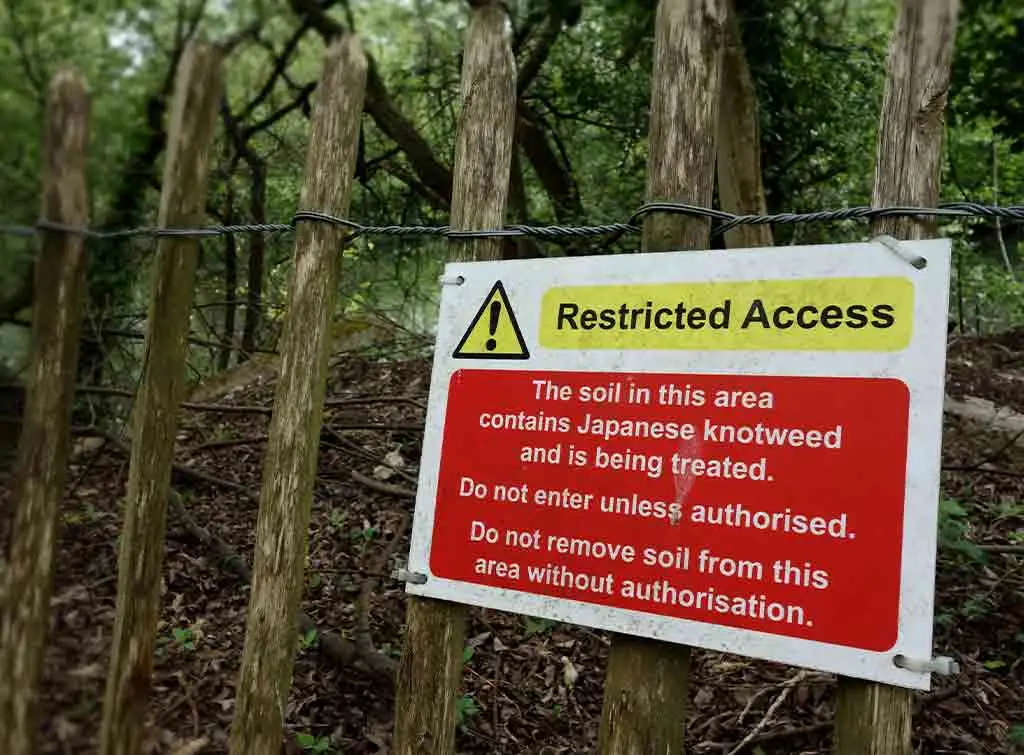
Simon also advises that people looking to sell their property will often simply hide the problem by digging down a couple of feet into the ground to remove visible signs of a Japanese knotweed infestation.
The knotweed will quickly grow back as you'll need to dig down at least a couple of metres to have any effect.
If you're selling your property, never hide the problem in this way. Specialist solicitors can make claims against previous owners for failing to disclose a Japanese knotweed infestation to potential buyers.
Other methods of removing Japanese knotweed
There are several other methods that you can use to remove Japanese knotweed from your garden, although they're not common:
Sifting and screening
Sifting and screening is when the knotweed-infested soil gets dug out and screened (both mechanically and manually) to remove any traces of the weed.
The waste will end up in a specialist landfill, while the non-infested soil can be used elsewhere on a development.
Soil screening can be a sustainable and cost-effective solution for removing Japanese knotweed, costing around £1,750–£4,950, but it's not a one-off treatment.
It's always possible that a small trace of knotweed slips through the net, so you shouldn't use it in conjunction with other removal methods.
Excavation and root barriers
In this method of Japanese knotweed removal, professionals can reduce the levels of contamination through excavation, before using root barriers to prevent the knotweed infestation from spreading (for example, into neighbouring gardens).
This reduces the amount of waste that goes off-site to landfill.
Expect to pay an average of £1,750–£4,950 for excavation and root barrier treatment.
Excavation and on-site relocation with ongoing herbicide treatment
Where there's a lot of space, a professional can excavate Japanese knotweed. They will then remove it to a lower-risk location on-site, where it's kept under control using herbicide treatment long-term.
This is a more sustainable solution than dumping the waste in landfills. This also tends to be more cost-effective especially as you can often claim Land Remediation Tax Relief.
This method is more appropriate for larger sites, such as phased developments, rather than domestic sites. It costs around £4,000–£20,000 on average.
On-site burial
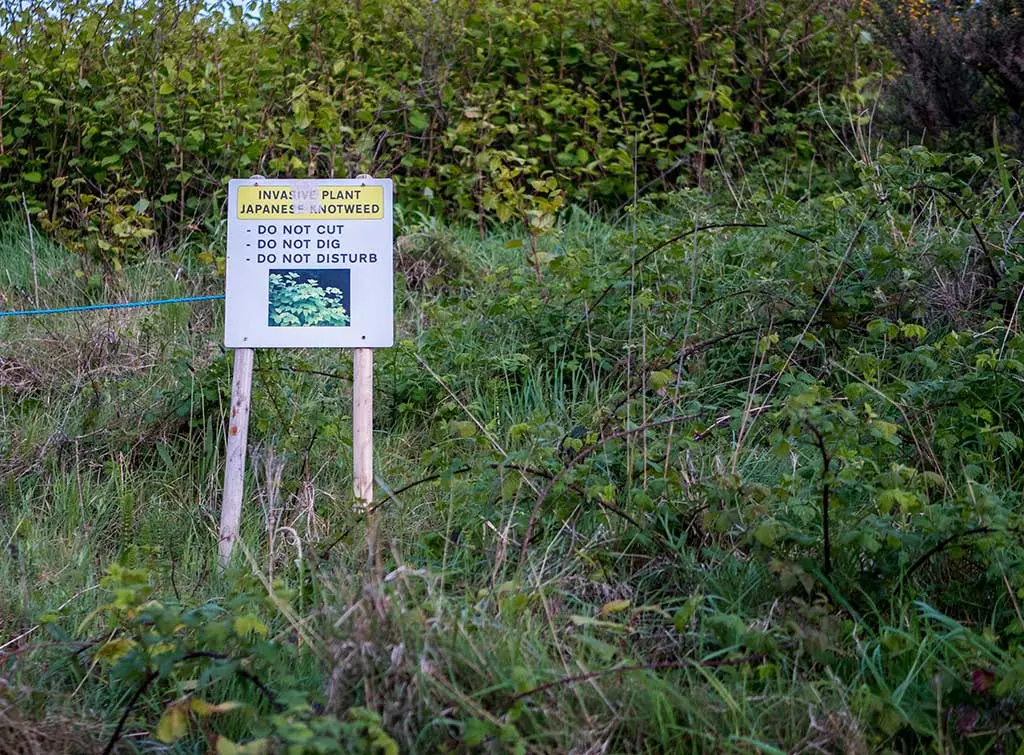
In this solution, after excavating the knotweed, it gets buried on-site in a deep burial pit, encapsulated in a cell.
The top of the cell has to be at least two metres below ground level. That way it avoids any accidental disturbance by humans or burrowing animals in the future.
This solution can be a lot more cost-effective than disposing of the waste in a landfill, though it still costs around £4,000–£14,950.
However, it does require enough space for a large pit so it often works best in areas that have been proposed for public open space.
What is a Japanese knotweed management plan?
A Japanese knotweed management plan is a written programme that sets out how the infestation will be treated over time.
Most domestic plans run for five years and cover regular herbicide treatments, progress monitoring, and a final sign-off. Once a plan is in place, the cost of the annual treatment is usually included in the original quote.
The plan comes with an insurance-backed guarantee. Combined with the management plan, this is what solicitors and mortgage lenders will ask to see if you're selling a property affected by knotweed. Without a recognised management plan and guarantee, some lenders will decline the mortgage application outright.
Make sure the company you choose is accredited by the Property Care Association (PCA).
Get quotes for local Japanese knotweed removal costs
The best way to get accurate costs for removing Japanese knotweed is to speak to local experts.
We always recommend getting at least three quotes from different tradespeople. That way you can check that you're being quoted fair and competitive prices.
Search your postcode to find approved Japanese knotweed specialists in your area.
Find a trusted Japanese knotweed removal service

FAQs
This will depend on the size of the area that's affected and the severity of the problem. A large area of mature Japanese knotweed could take up to 2-3 years to fully remove all traces of the plant.
Smaller, less dense patches would take less time. The sooner you start dealing with your Japanese knotweed problem, the quicker you'll be rid of it.
If the herbicide is applied to the leaves of the plant, it's usually rainfast within ten minutes.
However, it requires repeat treatment over three to five years. If the plant is well established, it could take even longer.
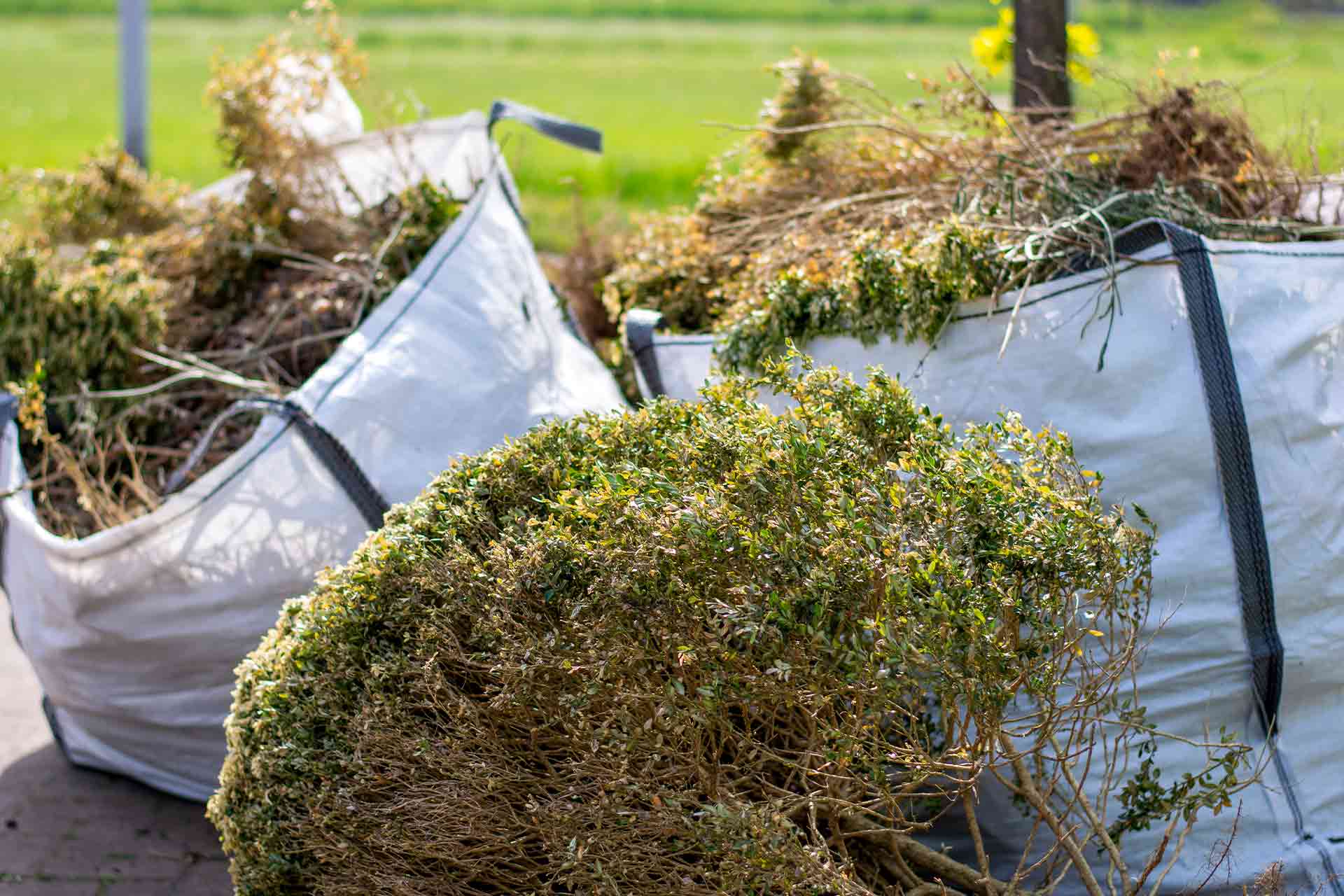
Any Japanese knotweed that you cut loose should be placed inside sturdy plastic rubble sacks. You'll need to dispose of those sacks at a specialist landfill site.
Some councils in the UK offer free specialist collection services for Japanese knotweed. Get in touch with your local council to see if this is something they offer in your area.
If you only have a small amount of Japanese knotweed present, you could try carrying out a herbicide treatment yourself.
Glyphosate-based products are best for controlling Japanese knotweed, with a typical 5l bottle of glyphosate-based herbicide.
That said, if you don't have prior experience, it's best left to the professionals. There are safety considerations and the job needs to be carried out properly to nip the infestation in the bud.
Although Japanese knotweed is a garden pest, there's no statutory requirement to control, eradicate, or even report its presence.
That said, it's illegal to plant or cause Japanese knotweed to grow in the wild. Doing so could see you receive major fines or even a prison sentence of up to two years.
Not only that, but letting Japanese knotweed spread to private lands, such as your neighbour’s garden, could lead to legal claims against you.
Yes, it's possible. This will depend on your mortgage lender, but many lenders will reject a mortgage outright if a survey indicates that there's Japanese knotweed on the property.
If you're selling a property, it's often worth paying for the Japanese knotweed removal cost to avoid problems for potential buyers.

See the tradespeople we've checked for your job